
Temporary anchorage devices (TAD)
At Dr Bala Neel Orthodontics, we offer the latest orthodontic techniques to ensure the most effective and precise treatment possible, including the use of temporary anchorage devices, or TADs. These small, specialised implants can provide additional support during orthodontic treatment.

What are temporary anchorage devices?
Temporary anchorage devices are tiny titanium screws that are gently inserted into the jawbone to act as fixed anchor points during orthodontic treatment. Unlike teeth, which can shift slightly under pressure, TADs remain completely stable. This allows for controlled tooth movement in specific directions that would otherwise be difficult or impossible with braces or aligners alone.
As the name suggests, TADs are temporary. They are usually in place for a few months during a particular phase of treatment, then removed once their job is done.
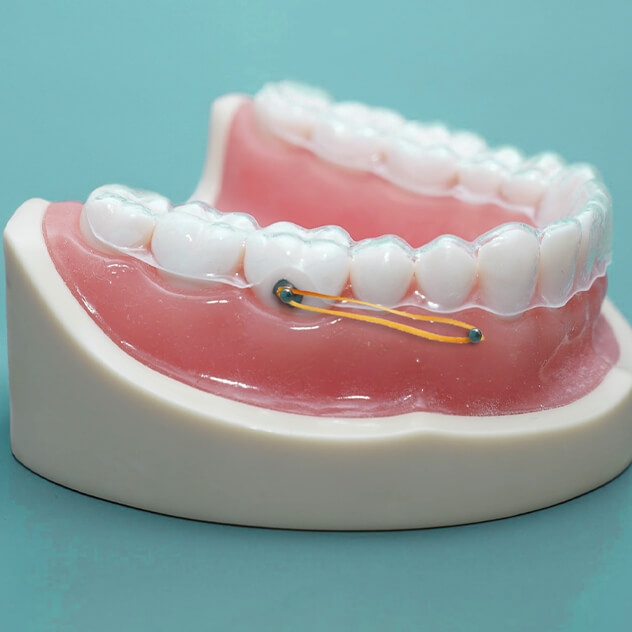
How TADs are used in orthodontics
TADs are commonly used when we need to move one or several teeth without affecting others nearby. They’re especially helpful for:
- Closing large gaps
- Correcting bite alignment
- Intruding (pushing down) over-erupted teeth
- Moving molars forward or backward
- Supporting complex tooth movement that traditional braces can’t achieve on their own
The process of placing a TAD is quick and comfortable. After numbing the area with a local anaesthetic, the device is gently inserted into the gum and jawbone, which usually takes just a few minutes. Once in place, the TAD can be used immediately to help guide the desired tooth movement.
Benefits of using TADs
- Precise control over tooth movement
- Speeds up treatment time in certain cases
- Minimally invasive with no incisions or stitches required
- Easily removed once no longer needed
- Reduces need for headgear or more complex appliances

FAQs about TADs
Is getting a TAD painful?
How long will a TAD stay in place?
How do I care for a TAD?
Will I feel the TAD in my mouth?
What happens when the TAD is no longer needed?
Ask us about TADs at your orthodontic consultation
Temporary anchorage devices are just one of the many advanced tools we use at our clinic to deliver safe, effective and efficient orthodontic care. If you’re planning to start treatment Dr Bala Neel can let you know if TADs could benefit your treatment plan.
Book your free consultationCONTACT US
Reach out to our team
Book a consultation with Dr Bala Neel Orthodontics today.
Seaview Dental Practice
533 Ashley Road
Poole, BH14 , 0BD
Opening Hours
- Monday
- 08:30am - 18:00pm
- Tuesday
- 08:30am - 18:00pm
- Wednesday
- 08:30am - 17:30pm
- Thursday
- 09:00am - 16:00pm
- Friday
- 08:30am - 14:00pm
- Saturday
- 09:00am - 13:00pm
 Open in Google Maps